If you're a UK investor deciding where to put your money, you've probably seen two names come up again and again: S&P 500 and FTSE 100. Both are index funds. Both sound serious. But which one actually makes sense for your Junior ISA, Stocks & Shares ISA, or regular investment account?
🎯 The Quick Answer
For long-term UK investors, S&P 500 is usually better than FTSE 100 alone. Why? Historical returns (8-10% vs 6-7%), more diversification (500 companies vs 100), and less exposure to UK economic risk. But the honest answer is: use both, or go global with an all-world index fund.
What Are These Indexes?
🇺🇸 S&P 500
The 500 largest companies listed on US stock exchanges (Apple, Microsoft, Tesla, Amazon, etc.).
- Covers ~80% of US market cap
- Heavy tech exposure (35%+)
- Global companies (many revenue from abroad)
- Priced in US dollars
🇬🇧 FTSE 100
The 100 largest companies listed on the London Stock Exchange (HSBC, Shell, Unilever, etc.).
- Covers ~80% of UK market cap
- Heavy financials & energy (40%+)
- Many earn abroad (commodity exporters)
- Priced in GBP
Historical Returns: The Numbers
| Period | S&P 500 | FTSE 100 | Difference |
|---|---|---|---|
| 10 years (2014-2024) | ~13% p.a. | ~8% p.a. | S&P 500 +5% |
| 5 years (2019-2024) | ~15% p.a. | ~7% p.a. | S&P 500 +8% |
| 1 year (2024) | ~22% | ~8% | S&P 500 +14% |
Translation: If you'd invested £1,000 in an S&P 500 index fund 10 years ago, it would be worth around £3,300 today. The same £1,000 in FTSE 100 would be worth around £2,100. That's a £1,200 difference from compound returns alone.
📌 Important Caveat
Past performance doesn't guarantee future results. The S&P 500's outperformance is partly due to US tech dominance in the 2010s-2020s. This could change. Diversification still matters.
Why Has S&P 500 Outperformed?
1. US Tech Boom
The S&P 500 is heavily weighted toward technology (Apple, Microsoft, Nvidia, Tesla). The past 15 years have been the golden age of tech. FTSE 100 has minimal tech exposure — it's dominated by banks and oil companies instead.
2. Diversification
500 companies vs 100. The S&P 500 spreads risk across more sectors. FTSE 100's top 10 companies make up ~40% of the index. That concentration is riskier.
3. Global Earnings
S&P 500 companies earn revenue globally. Even a slowdown in the US doesn't kill them. FTSE 100 companies export commodities or financial services — they're more sensitive to global economic cycles.
4. UK Economic Headwinds
Post-Brexit, post-pandemic, UK growth has lagged the US. FTSE 100 reflects that. It's not the index's fault — it's just tracking the UK economy, which has been slower.
S&P 500 vs FTSE 100: Head-to-Head
| S&P 500 | FTSE 100 | |
|---|---|---|
| Historical return | 8-10% p.a. (long-term) | 6-7% p.a. (long-term) |
| Companies | 500 | 100 |
| Tech exposure | 35%+ | <5% |
| Dividend yield | ~1.3% | ~3.5% |
| Currency risk | Yes (USD exposure) | No (GBP-based) |
| Best for | Growth, long-term | Income, diversification |
| UK tax treatment | Same in ISA | Same in ISA |
Costs & Fees: A Minor Factor
Fee differences are tiny. Here's what you'd pay on a typical UK platform:
Vanguard S&P 500 Index Fund
- Platform fee: 0.15%
- Fund fee: 0.07%
- Total: 0.22% p.a.
iShares UK Equity Index Fund (FTSE 100)
- Platform fee: 0.15%
- Fund fee: 0.06%
- Total: 0.21% p.a.
The difference is 0.01% — literally pence on a £1,000 investment. Don't choose your index based on this.
Currency Risk: A Real Consideration
S&P 500 is priced in US dollars. When you buy it with pounds, you're essentially betting on USD strength.
Scenario 1: Pound weakens (good for US holdings)
In 2023, the pound fell against the dollar. Your S&P 500 holdings became worth more in GBP, even if the index itself went flat. Bonus return.
Scenario 2: Pound strengthens (bad for US holdings)
If the pound rallies in 2026, your S&P 500 holdings lose value just from currency movement. The index could be up 5%, but your GBP returns could be only 2% due to fx.
Over 10+ years? Currency swings usually average out. You get some years of currency tailwind, some of headwind. It's not a reason to avoid S&P 500, but it's worth knowing about.
So Which One Should You Choose?
✅ Choose S&P 500 if:
- You want growth over the next 10+ years
- You're comfortable with some currency risk
- You want international diversification
- You believe US tech will stay relevant
✅ Choose FTSE 100 if:
- You want dividend income now
- You want no currency risk
- You want to support UK companies
- You like oil/banks/mining exposure
✅ Choose Both (or Global) if:
- You want the best of both worlds
- You want true diversification
- You can't decide (honestly, safest choice)
- You want to reduce single-country risk
What We Actually Do
🎯 Our Portfolio Breakdown
Zo's Junior ISA is 70% global all-world index (FTSE All-World), which includes both UK and US, but is weighted globally. The remaining 30% is individual picks. She's not isolated to just FTSE 100 or just S&P 500 — the global index gives her exposure to both plus emerging markets.
Why? It's simple, diversified, and removes the "which one?" question. Global indexes are increasingly popular for exactly this reason.
Tax Treatment in UK ISAs
Here's the best part: it doesn't matter from a tax perspective.
- Inside a Stocks & Shares ISA or Junior ISA: Zero tax on gains, dividends, or growth
- No capital gains tax
- No income tax on dividends
- No reporting to HMRC
- Annual limit: £20,000 (adult ISA) or £9,000 (Junior ISA, 2025/26)
This is why ISAs matter. The tax wrapper is more valuable than whether you pick S&P 500 or FTSE 100.
Best UK Platforms for These Funds
Hargreaves Lansdown
Widest range of S&P 500 and FTSE 100 index funds. Excellent research tools. 0.25% platform fee but worth it for choice and support.
Open HL Account → This is an affiliate link — we may earn a small commission if you sign up. This doesn't affect our opinions.Vanguard Direct
Lowest fees (0.15% fund fees on their own index funds). Own both S&P 500 and UK All-Cap funds. Minimum £500 or £100/month.
Open Vanguard → This is an affiliate link — we may earn a small commission if you sign up. This doesn't affect our opinions.Trading 212
Zero fees, fractional shares, practice mode. Good for beginners. More limited range than HL but covers the main indexes.
Open Trading 212 → This is an affiliate link — we may earn a small commission if you sign up. This doesn't affect our opinions.Frequently Asked Questions
Should I buy S&P 500 or FTSE 100 for my Junior ISA?
For a Junior ISA, S&P 500 or a global index is usually better than FTSE 100 alone because you have 10+ years for compound growth. FTSE 100's lower returns and income focus suit people needing dividends now, not teenagers saving for university.
Can I own both S&P 500 and FTSE 100?
Absolutely. Many investors hold both for diversification. Or you can use a global index (like FTSE All-World) that automatically gives you exposure to both plus 3,000+ other companies.
What if the S&P 500 crashes?
It will, eventually. Markets always crash. But if you're investing for 10+ years, history shows you recover and grow beyond previous highs. FTSE 100 also crashes. Diversification and time are your friends.
Is S&P 500 overvalued right now?
Possibly. US valuations are high in 2026. But trying to time the market is notoriously difficult. Dollar-cost averaging (investing monthly) helps smooth out valuations over time. Many investors use this approach.
Do I need to worry about Brexit or UK risk with FTSE 100?
FTSE 100 already reflects Brexit impacts. Most FTSE 100 companies earn 70%+ of revenue overseas. You're not betting solely on UK performance — you're betting on global commodity prices, banking stability, and oil markets.
Ready to Invest?
Whether you choose S&P 500, FTSE 100, or go global, the key is to start. See how we're using index funds to grow Zo's portfolio.
Capital at risk. Investments can go down as well as up. This is not financial advice. Past performance is not a guide to future results. Please do your own research before investing.
📚 Further Reading
Books that shaped how we think about investing — available on Amazon UK:
- The Little Book of Common Sense Investing — The case for index funds from the man who invented them

- Millionaire Teacher — A teacher proves index investing beats active management
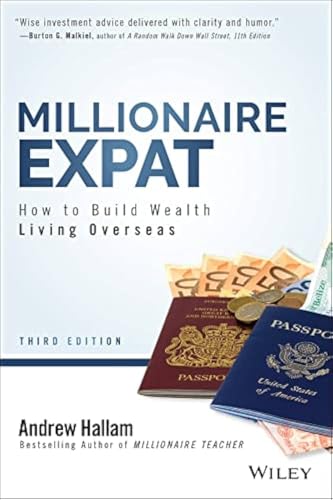
- The Simple Path to Wealth — The simplest guide to building wealth with index funds

Important: This is not financial advice. We're sharing our analysis and personal choices. All investing involves risk. Past performance doesn't guarantee future results. If you're unsure, speak to a qualified financial advisor.
This post contains affiliate links. If you open an account through our links, we may earn a commission at no extra cost to you. Full disclosure.